


February 12, 2026

In the latest trend of the opioid crisis, fentanyl addiction has spread like wildfire across America. Even in places like Tulsa, Oklahoma City, and our rural counties, families have felt the impact. But what exactly is Fentanyl? It is a synthetic opioid up to 50 times stronger than heroin and 100 times stronger than morphine.
Recognizing these early warning signs of fentanyl addiction could save a life. At Great Plains Recovery Center, we offer specialized care to those in need. Here’s a handy guide to help identify the symptoms of abuse and how treatment can help.
What Is Fentanyl And Why Is It So Dangerous?
Fentanyl was originally developed for surgery and treatment for severe chronic pain, typically in cancer patients. But the illicitly manufactured version currently floods the streets of America, even in places like Oklahoma.
The real danger of fentanyl is in its potency. In some cases, the lethal amount can fit on the tip of a ballpoint pen. For someone with a fentanyl addiction, each use is a gamble.
The drug also binds to your body’s opioid receptors and desensitizes them over time. The build-up of tolerance and severe physical dependency makes quitting nearly impossible without professional help.
Identifying Signs Of Fentanyl Addiction
Recognizing fentanyl abuse symptoms early could be the difference between a successful intervention and a fatal overdose. Because fentanyl is so powerful, the signs of use often manifest quickly and intensely.
Physical Fentanyl Addiction Symptoms
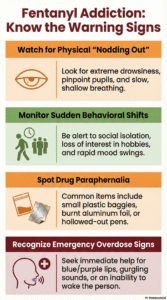
- Extreme Drowsiness: Often referred to as “nodding out,” where the individual drifts in and out of consciousness.
- Pinpoint Pupils: The pupils will appear unusually small, even in dim lighting.
- Respiratory Depression: Slow, shallow, or labored breathing is a hallmark of opioid use.
- Nausea and Vomiting: Opioids frequently cause gastrointestinal distress.
- Skin Changes: Users may have a pale or ashen complexion, and their skin may feel cold or clammy to the touch.
Behavioral And Psychological Warning Signs
- Social Isolation: Withdrawing from long-time friends and family to spend time with new acquaintances or alone.
- Loss of Interest: Abandoning hobbies, work responsibilities, or school commitments.
- Mood Swings: Rapid shifts between euphoria, irritability, and deep depression.
- Financial Strain: Unexplained requests for money or the disappearance of valuables from the home.
- Paraphernalia: Finding small plastic baggies, burnt aluminum foil, or hollowed-out pens.
Fentanyl Overdose Warning Signs
Because fentanyl is often mixed with other drugs, users may not realize they are consuming it. A fentanyl overdose is a medical emergency that requires immediate action. If you suspect someone is overdosing, you should call 911 immediately.
Key indicators of a fentanyl overdose include:
- Blue or purple tint to the lips and fingernails.
- Gurgling or “snoring” sounds (the death rattle).
- Inability to wake the person up or get them to speak.
- Extremely slow heart rate or pulse.
- Limp body and non-responsive pupils.
In Oklahoma, the Oklahoma Department of Mental Health and Substance Abuse Services (ODMHSAS) encourages the use of Naloxone (Narcan), a life-saving medication that can reverse an opioid overdose. Many pharmacies and community organizations across Tulsa and OKC provide Narcan at no cost.
The Fentanyl Detox Process
The first step in any fentanyl treatment program is medical detoxification. Attempting to detox from fentanyl “cold turkey” at home can be dangerous due to the severe physical toll it takes on the body.
At Great Plains Recovery Center, our fentanyl detox process is medically supervised 24/7. This ensures the safety and comfort of the individual as the substance leaves their system.
What To Expect During Detox
The withdrawal symptoms for fentanyl usually begin within 6 to 12 hours after the last dose. These symptoms can include:
- Severe muscle and bone pain.
- Sleep disturbances and insomnia.
- Uncontrollable leg movements (restless leg syndrome).
- Intense cravings for the drug.
- Fever and sweating.
Our medical team uses safe medications to ease symptoms and significantly reduce the discomfort. This prevents the early exit from treatment that often happens during unassisted detox.
Fentanyl Addiction Treatment In Oklahoma
Once the detox process is complete, the focus shifts to clinical rehabilitation. At Great Plains Recovery Center, we offer a full continuum of care to ensure Oklahomans have the best chance at long-term sobriety.
Residential Treatment
For many, a residential stay is the safest option for fentanyl recovery. This 30-to-90-day program removes the individual from the triggers and environment of their addiction. In our Tulsa facility, clients participate in:
- Cognitive Behavioral Therapy (CBT): To identify and change the thought patterns leading to drug use.
- Group Therapy: Building a community with others who understand the unique struggle of opioid addiction.
- Family Counseling: Repairing the relationships that have been strained by the addiction.
Outpatient Options (PHP and IOP)
For those who have completed residential care or have responsibilities in Oklahoma City that they cannot leave entirely, our Partial Hospitalization Program (PHP) and Intensive Outpatient Programs (IOP) provide continued clinical support. These programs offer the structure of rehab while patients transition back to their daily lives.
How To Help Someone Addicted To Fentanyl
Approaching a loved one about their fentanyl addiction is incredibly difficult. It requires a balance of firm boundaries and compassionate support.
- Educate Yourself: Understand that addiction is a chronic disease, not a moral failing.
- Choose the Right Time: Speak to them when they are not under the influence and when the environment is calm.
- Use “I” Statements: Instead of “You are ruining your life,” try “I am scared for your safety and I want to help you find professional support.”
- Research Options: Have the contact information for an Oklahoma fentanyl treatment center ready.
- Set Boundaries: Be clear about what you will and will not do (e.g., “I will take you to an assessment, but I will no longer give you money for rent”).
Insurance And SoonerCare For Fentanyl Treatment
One of the biggest concerns for Oklahoma families is how to pay for treatment. Great Plains Recovery Center accepts most major private insurance plans. Additionally, we are familiar with the requirements for SoonerCare (Oklahoma Medicaid), which can provide coverage for essential addiction services.
Our admissions specialists can perform a confidential insurance verification to help you determine exactly what your plan covers, ensuring that financial barriers do not stand in the way of life-saving care.
Why Choose Great Plains Recovery Center?
While there are many options for addiction recovery, Great Plains Recovery Center stands out as a premier destination for Tulsa addiction recovery. We combine clinical rigor with a deep understanding of the Oklahoma landscape.
- Expert Clinical Team: Our staff consists of master’s-level therapists and experienced medical professionals who specialize in opioid use disorders.
- Individualized Plans: No two addictions are the same. We tailor every treatment plan to the specific needs, history, and goals of the client.
- Dual Diagnosis Support: We address co-occurring mental health issues like anxiety or depression that often fuel fentanyl use.
- Aftercare Focus: We don’t just treat the addiction; we help you build a life after rehab with robust discharge planning and connections to local support groups.
Our Location
Great Plains Recovery Center is located in Tulsa, serving clients from across the state, including Oklahoma City, Edmond, and Norman. Many residents from the OKC metro find that traveling to Tulsa for treatment provides the necessary distance from their environment while remaining close enough for family to participate in the healing process.
Great Plains Recovery Center 7210 S. Yale Ave
Tulsa, OK 74136
Phone: 918-731-3173
Start The Recovery Journey
The path to recovery from fentanyl addiction begins with a single, courageous phone call. Our admissions team is available to answer your questions, conduct an initial assessment, and help you navigate the steps to entering our program.
If you are ready to help a loved one or start your own journey, contact us online or call 918-731-3173
Crisis and Emergency Guidance
If you are in immediate danger or witnessing an overdose, please call 911 immediately. For mental health support and crisis intervention, you can contact the 988 Suicide & Crisis Lifeline by calling or texting 988.
Learn More
- National Institute on Drug Abuse (NIDA): Fentanyl Facts
- SAMHSA: Opioid Overdose Prevention Toolkit
- Oklahoma Department of Mental Health and Substance Abuse Services (ODMHSAS)
- CDC: Fentanyl Facts